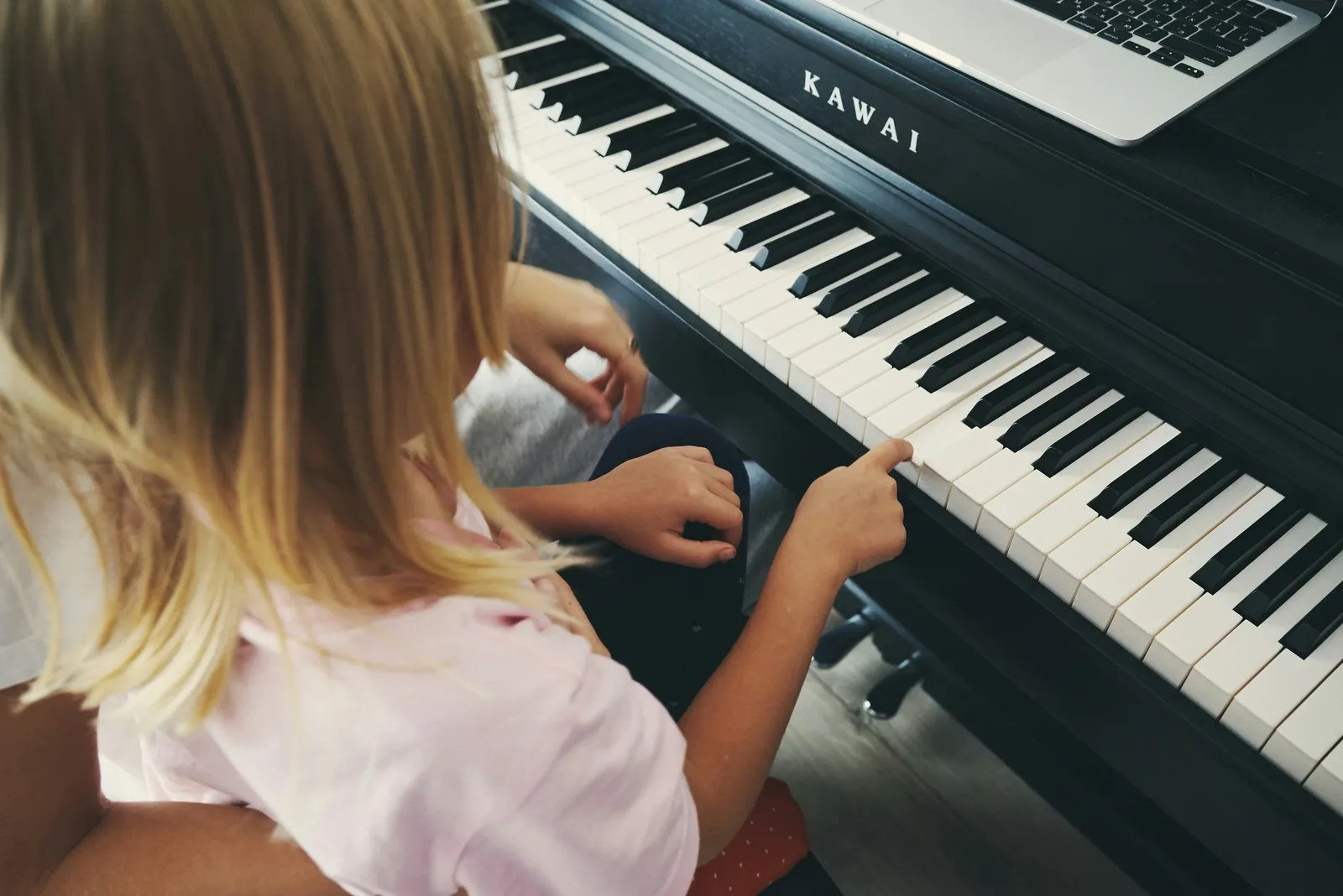
Helping Your Child Thrive in Their First Piano Lessons: A Guide for Parents
Starting piano lessons gives your child a huge advantage in life. Learning music and the piano is about more than just music; it gives your child better working memory and attention, increased neuroplasticity, an increase in confidence and self-esteem, and further development of fine motor skills. For young beginners, the support they receive at home plays a huge role in how joyful and successful their learning journey becomes.
In my piano studio, I work with an approach specially designed for young children, focusing on healthy movement, imagination, and musical curiosity. Below are some practical tips for parents to help their child get the most out of their lessons. The good news is, you don't need a musical background yourself to encourage your child, and you can even learn alongside them.
1. Efficient posture comes first
Before children learn notes or rhythms, they learn how to sit at the piano. Good posture creates comfort, prevents tension, and allows for beautiful sound later on.
- Sit tall with relaxed shoulders
- Keep feet supported (a footstool helps!)
- Maintain curved, “ready to play” fingers
- Allow the wrists to stay soft and flexible
These small habits form the foundation of effortless, expressive playing, and the calm focus transfers to sitting at school, too.
2. Slow practice is smart practice
Young children sometimes think fast playing equals good playing. Actually, the opposite is true, even professionals practise slowly for intelligent, efficient practice.
- Coordinate their hands
- Listen more carefully
- Avoid mistakes that are hard to unlearn
- Build confidence with each step
At home, encourage your child to play slowly and beautifully, focusing on one small skill at a time.
3. Learning through stories and imagination
Children learn best when movement and imagination come together. Many early pieces are designed around characters, animals, and stories that guide musical expression. You can support this by asking:
- “What story does this piece tell?”
- “Can you make it sound like a tiny mouse? Or a big bear?”
- “How would you play this if the melody was whispering?”
4. Listening is the first musical skill
Long before reading notation, children learn to listen deeply. Listening helps them develop rhythm, expression, touch, and coordination.
- Ask your child to sing phrases before they play them
- Invite them to contrast sounds (soft vs. strong, smooth vs. bouncy)
- Listen together to short pieces and talk about what they notice
5. Free, natural movement makes beautiful sound
Tension is the biggest barrier to enjoyable playing. Young pianists learn gentle wrist motions and flexible arm movements to keep their hands relaxed. If you notice stiffness, a simple reminder like “soft hands” can bring ease back into their playing.
6. Small steps lead to big progress
Early pieces are learned in small, manageable stages:
- Hearing and singing the melody
- Feeling the rhythm
- Practising movements away from the keys
- Finally, playing on the piano
This step-by-step process prevents overwhelm and helps children feel successful from the very beginning.
7. Short, frequent practice works best
Young children learn most effectively through short, focused and frequent practice sessions. A good rhythm at home might be:
- 10–15 minutes a day
- Divided into mini sessions if needed (morning and afternoon)
- A clear, simple goal each time
8. Celebrate the beautiful moments
One of the greatest gifts you can give your child is encouragement. Celebrate a relaxed hand, a singing tone, a steady rhythm, a moment of concentration. Children thrive on noticing what went right.
9. Your involvement matters, and it's simpler than you think
You don't need musical experience to support your child. Chat about what they're learning, use the same words the teacher uses, and keep practice calm, consistent and playful.
A musical journey you take together
Starting piano is more than learning notes. It's learning how to listen, coordinate the body, focus, and express feelings through sound. With gentle guidance, imagination and a little daily consistency, your child will build skills that stay with them for life.