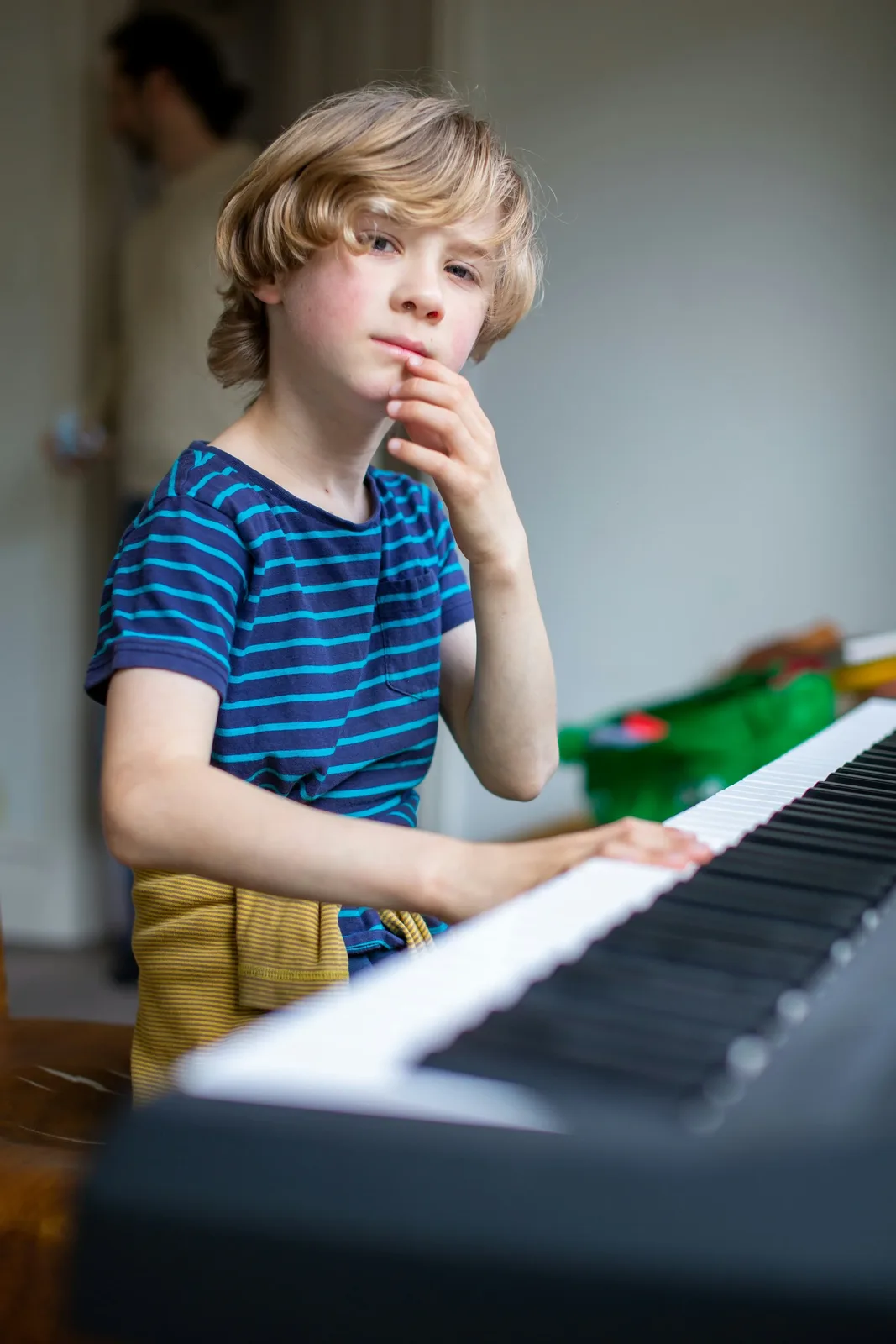
The Scientifically Proven Benefits of Piano Lessons for Children
As a parent, you want activities that nurture your child's growth, intellectually, emotionally, and socially. Piano lessons are often recommended for these reasons, but what does scientific research actually show?
Below, we break down key areas where peer-reviewed studies have explored the effects of musical training, including evidence and what findings are most relevant to early piano education.
1. Music training and brain function
Better neural processing of sound
One of the strongest findings from neuroscience is that children who receive systematic music training show measurable changes in how their brains process sound, especially speech. A study in The Journal of Neuroscience found that after two years of music training, children developed stronger neural distinction of speech sounds, which is associated with language and reading skills.
2. Music and executive function
A meta-analysis shows benefits in preschool children
A systematic review and meta-analysis of controlled studies in young children (ages 3–6) found significant improvements in:
- Inhibitory control (self-regulation)
- Working memory (holding and manipulating information)
- Cognitive flexibility (switching between tasks)
These executive functions are key for focus, learning new skills, and adapting to structured practice.
3. Music and working memory across childhood
A large longitudinal study tracking children and young adults found that those who practised a musical instrument had greater improvements in working memory and processing speed over time, even after controlling for other activities and parental education.
4. Music and language-related skills
Weekly music instruction over six months has been shown to help young children better distinguish speech sounds, an important precursor to reading and language development.
5. Music and early literacy
Recent research in the Early Childhood Education Journal explored how rhythm training, central to piano study, supports literacy development and working-memory performance in early school-aged children.
6. Brain imaging and musicians
Several imaging studies find that children with long-term musical training show structural and functional differences in brain regions related to auditory processing, motor control and multimodal integration, pointing to neuroplastic changes from sustained music engagement.
What parents should know
- Enhanced neural processing of sound and speech, linked to language and reading foundations.
- Improved executive function (memory, inhibitory control, cognitive flexibility) in young learners.
- Associations between sustained practice and stronger working memory.
- Rhythm training correlates with literacy and cognitive skills.
Selected peer-reviewed references
- Music enrichment programs improve the neural encoding of speech in at-risk children. J Neurosci. 2014.
- Effects of music training on executive functions in preschool children aged 3–6 years. 2022.
- Music practice is associated with development of working memory during childhood and adolescence. 2014.
- Rhythm and reading: connecting rhythm training to literacy skills. Early Childhood Education Journal. 2024.
- Music literacy improves reading skills via bilateral orthographic development. Scientific Reports. 2024.
- Meta-analysis on cognitive and academic benefits of music training. Memory & Cognition. 2020.